

Expert Insights for Customer Satisfaction & Growth
30 years of research shaping customer journeys and financial services
User Research
Consumer duty, personal financial products, financial inclusion
Data-driven insights to improve user experience.
Tailored strategies for organisations, charities and financial services.
Journey Mapping
Consulting


Financial Regulation
Understand, Define, Ideate, Prototype & Test
Invest in CPD training in Customer Experience for you and your team
CPD Training
Economics
Re-imagining the economy
About AskPyramid
With 30 years of expertise, we turn data into clear, actionable customer insights. We help you to realise your Customer Lifetime Value, retain customers and attract new ones. Becoming a 'customer first' organisation takes discipline but with agreed processes and systemic ways of working, blockages in your experience strategy can be transformed into amazing opportunities.


Our Approach
We combine economics, statistics, and user research to optimize customer journeys for the short and longer term by setting a path of continuous improvement. We believe in creating partnerships with a purpose and always strive for significant outcomes. When you work with us, expect collaboration with transparency along with knowledge transfer. We have case studies and proven proprietary methodologies. Click here to learn more


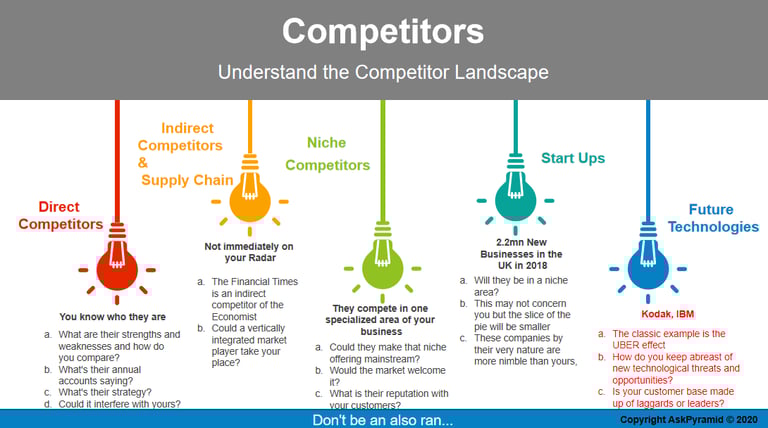
Our clients are our number one priority and our market intelligence services help them to size the realistic addressable market and understand the competitive landscape. Our services are customised to meet your specific needs. We work with you to establish what good looks like and utilising state of the art analysis, we carve a path to customer experience improvements. We work collaboratively throughout the entire process and guarantee measurable results. Find out more here.
“The first design sprint I did with you was excellent from a research perspective. I use your research plan and technique to advise other researchers new to sprints”
“Well done for some strong story telling. Very impressed…” Director of Research
“This is an excellent piece of work.” Senior Product Director
“I have not seen this depth of analysis on the user barriers to applying, it clarifies a number of stumbling blocks for us.” Product Manager
“Thank you……especially to Larna, for providing such an interesting and thoughtful consultation response, as my final one to review. It comes across as measured, respectful and well-argued, I enjoyed reading it.” FSCP Chair
Our Services
Tailored research and consulting to enhance your customer experience.


Customer Research
In-depth studies to understand your customers’ needs and behaviours.
Journey Mapping
Visualizing user journeys to pinpoint opportunities and pain points. Utilising AI tools to help understand what moves the needle.
Fintech Consulting
Expert advice on financial inclusion and optimizing fintech solutions in terms of the Consumer Duty & User experience
Market Analysis
Understanding the macro economy in which you operate and researching alternative economic systems for more equitable distribution.
Stay Informed
Get insights and updates from askpyramid
Contact
Phone
hello@askpyramidglobal.com
© 2025. All rights reserved.